OPTAV OCTOPUS series features modular detachable pigtail 1‑LC fiber extenders, covering mainstream AV interfaces including HDMI2.0, DP1.2, DVI and USB‑C.
Adopting unified single‑LC single‑fiber CWDM optical architecture, the series supports 4K@60Hz lossless transmission over OM3 multimode fiber up to 300 m and OS2 single‑mode fiber up to 20 km.
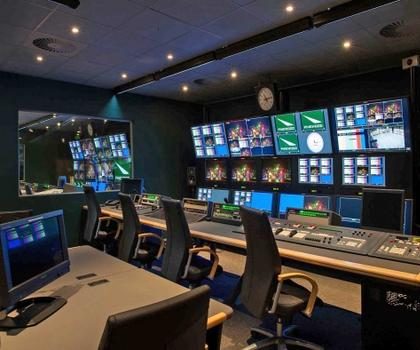
It is the preferred point‑to‑point solution for government‑enterprise meeting rooms, broadcast‑TV studios, medical imaging, campus digital signage and security surveillance projects.
OCTOPUS Full Product Matrix (Unified 1‑LC Interface)
All models share identical hardware optical design and interoperable fiber links, differing only in front‑end I/O interfaces. This enables standardized cabling and flexible mixed deployment in one project.
Underlying Optical Transmission Principle
Integrated 1270/1310 nm CWDM filter chip. Only one single fiber carries bidirectional 4K video plus reverse EDID / CEC / HPD control signals. Independent physical optical path for each LC connector for pure point‑to‑point transmission with full link isolation.
8/12/24‑fiber parallel transmission. One MPO connector bundles multiple video links. It requires factory‑pre‑terminated MPO trunk ribbon cables. Individual links cannot be split for separate cabling, bringing potential optical crosstalk risks.
| Comparison Item | OCTOPUS Series 1‑LC Single‑Fiber (Recommended) | MPO Detachable Fiber Extender Solution |
|---|---|---|
| Fiber & Component Availability | Industry‑standard LC jumpers, regular SM/MM fiber cables. LC ports are standard for ODF patch panels. Field fusion splicing / cold termination available. Components widely stocked with low lead‑time. | Must use custom pre‑terminated MPO trunk cables. Standard fusion splicers cannot terminate MPO on‑site. Special MPO polishing fixtures required. Long lead‑time and premium cost for niche parts. |
| Max Transmission Distance | Dual‑distance support: 300 m multimode for indoor; up to 20 km single‑mode for cross‑building stable 4K@60Hz HDR with controlled loss. | Limited within 300 m multimode. Cumulative multi‑fiber loss makes stable 4K 18Gbps impossible at 20 km single‑mode. |
| Fault Isolation & Video Stability | Independent per‑link optical path. LC insertion loss ≤0.15 dB. Fiber failure only impacts one display unit; other endpoints keep working. No cascading blackout risk for live events & meetings. | High total insertion loss up to 0.35 dB per MPO connector. Minor dirt on end‑face causes multi‑channel snow / flicker / simultaneous blackout. High risk for live broadcast scenarios. |
| Cabling Flexibility | Thin single fiber fits wall conduits, narrow ceiling trays and pre‑embedded pipelines. New endpoints can be added with extra single fibers without modifying existing trunk cabling. Perfect for concealed pre‑wiring during renovation. | Bulky MPO trunk cables are hard to pull through conduits. Fixed fiber count. Adding new endpoints requires full trunk cable replacement. Poor expandability for pre‑installed infrastructure. |
| Troubleshooting & Maintenance | Standard optical power meter supports per‑fiber diagnosis. Fault repair only replaces corresponding LC jumper. No special tools needed. | Cannot identify individual bad fiber. Entire MPO trunk must be replaced. Dedicated MPO test adapters are mandatory. Higher labor & spare‑part cost. |
| Total Cost of Ownership (TCO) | Standard LC patch panels, jumpers and cables reduce hardware CAPEX by 30%‑50%. Ordinary fiber splicers are sufficient. 5‑year O&M cost reduced by 60%. | Premium pricing for MPO trunks & special patch boxes. Certified specialist manpower required. High cost for expansion & repair. |
| Application Scope | Government‑enterprise meeting rooms, studios, medical, education, security — decentralized point‑to‑point AV projects with mixed short‑ & long‑distance requirements. | Only for high‑density data‑center rack‑side parallel short‑range links. Not suitable for distributed cross‑building AV deployments. |
| Series Compatibility | Unified 1‑LC optical interface across HDMI / DP / DVI / USB‑C models. Shared fiber infrastructure for mixed‑signal system. | Only compatible with proprietary MPO‑based devices. Cannot reuse cabling for different signal formats, causing fragmented system design. |

MPO solutions are inherently distance‑limited and only work for multimode within 300 m. Leveraging CWDM single‑fiber bidirectional technology, OCTOPUS single‑LC supports two major use‑cases:
1.Indoor multi‑floor exhibition halls & meeting rooms: stable 4K@60Hz YUV4:4:4 & HDR over OM3 multimode up to 300 m.
2.Cross‑campus buildings, remote medical consulting rooms, smart‑city security: up to 20 km non‑repeater transmission over OS2 single‑mode fiber.
As LC is the de‑facto standard for communication and AV equipment, existing ODF patch panels and pre‑laid fiber pipelines can be reused without full‑scale cabling renovation.

The biggest engineering pain point of MPO is all‑or‑nothing failure. Contamination or mechanical stress on one MPO end‑face may black‑out all connected displays simultaneously, which can cause severe service interruption during live broadcast or high‑level meetings.
OCTOPUS single‑LC provides full physical link isolation. Fiber damage only affects one corresponding display while all other endpoints remain operational. Built‑in optical status LED indicators offer instant visual link diagnosis, eliminating cascading failure risks for broadcast and medical grade applications.

The biggest engineering pain point of MPO is all‑or‑nothing failure. Contamination or mechanical stress on one MPO end‑face may black‑out all connected displays simultaneously, which can cause severe service interruption during live broadcast or high‑level meetings.
OCTOPUS single‑LC provides full physical link isolation. Fiber damage only affects one corresponding display while all other endpoints remain operational. Built‑in optical status LED indicators offer instant visual link diagnosis, eliminating cascading failure risks for broadcast and medical grade applications.

Compared with basic‑function MPO fiber extenders, OCTOPUS single‑LC series delivers complete professional engineering features:
1.Bandwidth: HDMI2.0 18Gbps, DP1.2 native 4K@60Hz 4:4:4 color depth, HDR10+, Dolby Vision, HDCP2.3 compliance.
2.Lossless audio pass‑through: Dolby Atmos, DTS:X, LPCM 7.1 multi‑channel.
3.Type‑C visual EDID management: EDID pass‑through / adaptive / built‑in preset; read, save and write custom .bin EDID files for medical monitors and special‑resolution LED walls.
4.Full galvanic isolation via fiber optics. Eliminates EMI/RFI interference from power cabinets, motors and studio lighting; no image ripple, snow or random black‑out in hospitals, factories and broadcast environments.

OCTOPUS HDMI / DP / DVI / USB‑C extenders share identical 1‑LC optical interface. Multiple signal types can run over one unified LC cabling infrastructure:
1.Auditorium scenarios: DP host signal, USB‑C PC source, HDMI media‑player all share central‑room LC patch panels.
2.Medical imaging center: DVI medical displays in radiology and HDMI projectors in meeting rooms reuse same fiber infrastructure.
Integrators do not need separate cabling schemes for different signal formats. This reduces drawing complexity, field installation workload and after‑sales overhead, strengthening tender competitiveness.

Independent point‑to‑point feeds for projectors and LED walls on different floors. Separate link control for time‑shared usage. Fixed‑count MPO trunk cables cannot support per‑floor decentralized cabling.
For 90% of government‑enterprise, broadcast‑TV, medical, education and security AV projects, OCTOPUS 1‑LC single‑fiber solution outperforms MPO multi‑fiber in transmission distance, signal stability, installation flexibility, total cost and multi‑signal interoperability. It is the optimal point‑to‑point 4K fiber extension choice.
MPO is only acceptable for high‑density short‑range rack‑to‑rack parallel links inside data‑center rooms. Not recommended for general government‑enterprise AV projects, due to inherent drawbacks: distance limitation, cascading‑failure risk, premium spare‑part cost and poor expandability for pre‑installed infrastructure.
OCTOPUS unified LC fiber ecosystem covers native HDMI, DP, DVI, USB‑C and cross‑conversion variants. Mixed‑signal projects adopt standardized cabling to simplify design, stocking and site delivery, improving integrator efficiency and project margin.